
Quick Answer: The best sheets overall in 2026 are the Brooklinen Luxe Sateen Core Sheet Set and the L.L.Bean 280-Thread-Count Pima Cotton Percale Set, consistently ranked at the top by independent testing labs and sleep experts. For hot sleepers, bamboo viscose options like the Cozy Earth Bamboo Sheet Set lead the field. The right choice depends on your sleep temperature, fabric preference, and budget.
Table of Contents
Key Takeaways
- Percale cotton is best for hot sleepers and those who prefer a crisp, cool feel; sateen is better for a smooth, luxurious drape but sleeps warmer
- Thread count between 200 and 400 is the sweet spot for most quality sheets; anything above 600 is often a marketing tactic, not a quality indicator
- Bamboo viscose sheets (Cozy Earth, LUXOME, Quince) are the top pick for temperature regulation and ultra-soft feel
- For sensitive skin and allergies, look for OEKO-TEX certified organic cotton or bamboo viscose with no chemical finishes
- Budget-friendly options like Mellanni microfiber and California Design Den 400-count sateen perform well in comfort tests despite low prices
- Expect to spend $80 to $200 for quality sheets that last; luxury sets from Brooklinen or Saatva run $150 to $300+
- Replace bed sheets every 2 to 3 years with regular weekly washing, or sooner if pilling, thinning, or elasticity loss appears
- Deep pocket sheets (15 to 21 inches) are essential for mattresses over 12 inches thick, including most memory foam and hybrid models
- Durability testing by Good Housekeeping’s fiber lab shows that pilling resistance and fabric strength matter as much as initial softness
- Sustainability-focused buyers should consider Coyuchi Organic Sateen or ettitude Signature Bamboo for eco-certified options
What Makes Good Quality Bed Sheets
Good quality bed sheets combine durable fiber, a well-constructed weave, and finishes that hold up after repeated washing. The three factors that matter most are fiber type, weave, and thread count, in that order.
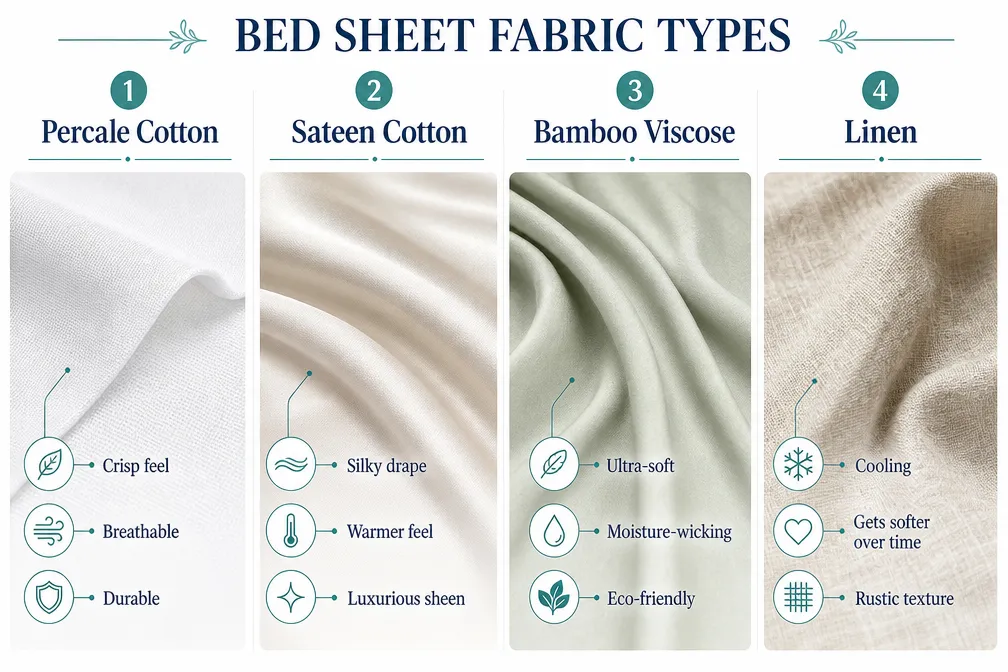
Fiber type is the foundation. Long-staple cotton varieties like Pima, Supima, and Egyptian cotton produce stronger, smoother yarns than short-staple cotton. Bamboo viscose offers a naturally soft, moisture-wicking alternative. Linen is breathable and gets softer with age. Polyester microfiber is affordable and wrinkle-resistant but traps heat.
Weave determines feel and breathability:
- Percale (one-over, one-under pattern): crisp, matte, breathable, and durable
- Sateen (four-over, one-under): silky, smooth, slightly warmer, and more prone to pilling over time
- Twill/flannel: brushed for warmth, ideal for cold climates
- Jersey: stretchy, casual, similar to a T-shirt
Thread count matters, but only within a realistic range. A 280-thread-count Pima cotton percale set from L.L.Bean consistently outperforms 800-count sets made from shorter, inferior fibers in real-world testing. The sweet spot for most quality sheets is 200 to 400 threads per inch.
“Weave, fiber quality, and finishing contribute more to feel and performance than chasing numbers like 800 or 1000.”
Good Housekeeping’s fiber lab evaluates sheets on fabric strength, pilling resistance, and washability alongside comfort, and the top performers are rarely the highest thread count options on the market.
What Are the Best Sheets for Hot Sleepers and Night Sweats
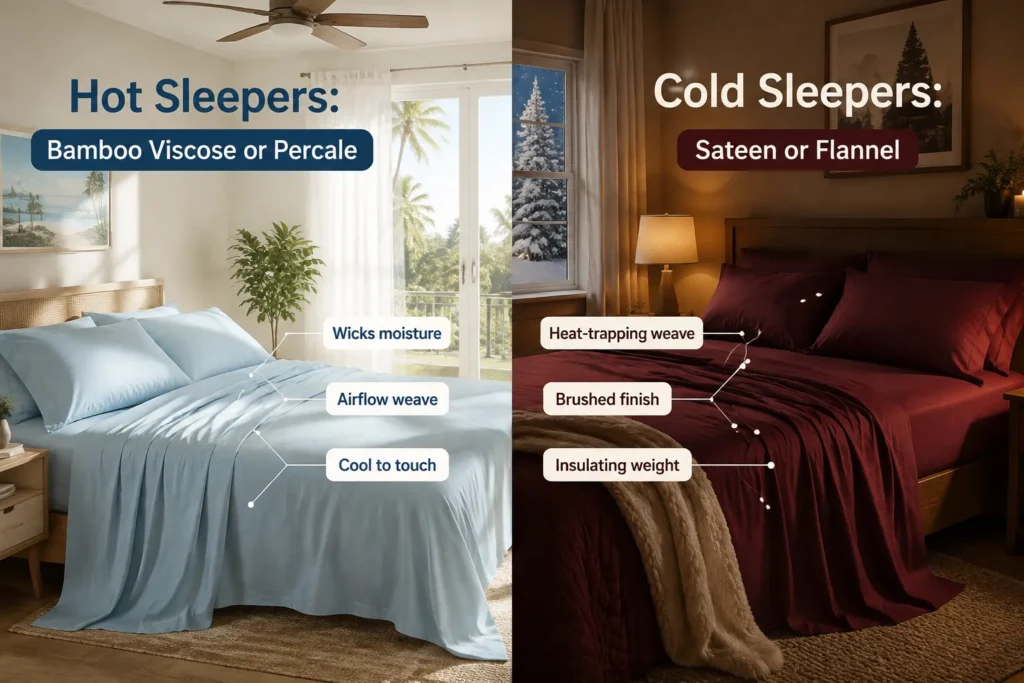
Hot sleepers and those with night sweats need sheets that wick moisture, allow airflow, and don’t trap body heat. The best options are percale cotton, bamboo viscose, Tencel (lyocell), and linen.
Top picks for hot sleepers in 2026:
- LUXOME Luxury Bamboo Viscose, Homes & Gardens’ pick for best sheets for hot sleepers; scores high on breathability and moisture management
- Cozy Earth Bamboo Sheet Set, rated 9 to 10 out of 10 for comfort and breathability in independent testing
- Casper Cool Supima Sheets, Mattress Nerd’s “Best Cooling” pick; Supima cotton percale with a crisp, airy feel
- Parachute Percale Sheets, consistently recommended for hot climates due to open weave structure
- Sijo AiryWeight Tencel Sheet Set, Sleepopolis’ top cooling pick on Amazon; Tencel lyocell is exceptionally moisture-wicking
- PeachSkinSheets Night Sweats Soft Sheet Set, NBC News Select’s pick specifically for night sweats
Common mistake: Choosing sateen sheets because they feel cool to the touch in the store. Sateen’s tight weave actually traps heat during sleep. Stick to percale or bamboo viscose if overheating is a concern.
Best Sheets for Cold Weather

- PLUSH & WARM: Our premium fleece sheets enhance the comfort level of any bed. They are soft, comfortable and breathable….
For cold sleepers and winter use, the best sheets trap warmth without feeling heavy or stiff. Sateen cotton, flannel, and jersey knit are the top choices.
- Sateen weave cotton (e.g., Brooklinen Luxe Sateen, Peacock Alley Soprano Sateen): the smooth, dense weave retains body heat better than percale
- Flannel sheets: brushed cotton or wool-blend flannel is the warmest option; ideal for climates with long, cold winters
- Jersey knit: stretchy and cozy, similar to wearing a sweatshirt to bed
Choose sateen if you want warmth with a luxurious feel. Choose flannel if you run very cold or live in a genuinely cold climate.
Cotton vs. Polyester Sheets: Which Is Better
For most sleepers, cotton outperforms polyester in breathability, durability, and long-term comfort. Polyester (microfiber) has its place, but it’s not the better overall choice.
| Factor | Cotton | Polyester/Microfiber |
|---|---|---|
| Breathability | Excellent | Poor to moderate |
| Softness (initial) | Good to excellent | Very soft |
| Durability | High (long-staple) | Moderate; pills over time |
| Moisture-wicking | Good | Poor |
| Price | Moderate to high | Low |
| Best for | Most sleepers | Budget buyers, guest rooms |
Choose cotton if you sleep warm, have sensitive skin, or want sheets that improve with washing. Choose microfiber if budget is the primary concern and the sheets are for occasional use (guest rooms, kids’ rooms).
What Thread Count Is Best for Sheets
The best thread count for most sheets is between 200 and 400. Within that range, fiber quality and weave determine feel far more than the number itself.
Here’s a practical breakdown:
- 200 to 300: Ideal for percale weaves; crisp, durable, breathable. L.L.Bean’s 280-count Pima percale is a benchmark example.
- 300 to 400: Works well for sateen and percale; California Design Den’s 400-count sateen is a top value pick.
- 400 to 600: Can be excellent if made from single-ply long-staple cotton, but quality varies widely.
- Above 600: Manufacturers often achieve these numbers by twisting multiple short-staple yarns together, which reduces breathability and durability. Avoid unless you can verify single-ply construction.
Decision rule: If two sets have the same fiber (e.g., Pima cotton), choose the one with the better weave construction and brand reputation over the higher thread count.
How Much Should You Spend on Bed Sheets
Quality bed sheets that perform well and last 3 or more years typically cost between $80 and $200 for a queen set. Luxury options run $200 to $350+, and budget picks start around $25 to $50.
Spending tiers:
- Under $60: Mellanni Iconic Collection Microfiber, Threshold 400-count cotton (Target). Good for guest rooms or short-term use.
- $60 to $120: Quince Bamboo Viscose, California Design Den 400-count Sateen, Saatva Essential Luxury. Strong value; perform well in comfort and durability tests.
- $120 to $200: L.L.Bean Pima Cotton Percale, Parachute Percale, Cozy Earth Bamboo. Expert-recommended for everyday use.
- $200 and above: Brooklinen Luxe Sateen, Silk & Snow Egyptian Cotton, Coyuchi Organic Sateen. Premium materials, long lifespan, luxury feel.
Are Expensive Sheets Worth It
Yes, in most cases, but only up to a point. Sheets in the $120 to $250 range made from long-staple cotton or premium bamboo viscose genuinely outperform budget options in durability, breathability, and how they feel after 50+ washes.
Above $300, the returns diminish. The difference between a $250 set and a $450 set is rarely noticeable in everyday use. The biggest performance jump happens when moving from under $60 microfiber to quality cotton or bamboo in the $100 to $200 range.
Exception: If you have specific needs (night sweats, allergies, sensitive skin), investing in the right specialized sheet, even at a higher price, is worth it because it directly affects sleep quality.
What Are the Best Sheets for Sensitive Skin and Allergies
For sensitive skin and allergy sufferers, the best sheets are OEKO-TEX certified organic cotton or bamboo viscose with no chemical finishes or synthetic dyes. These materials minimize irritation and resist dust mites.
Top picks:
- ettitude Signature Bamboo, Homes & Gardens’ pick for best hypoallergenic sheets; bamboo viscose is naturally antimicrobial
- Coyuchi Cloud Soft Organic Sateen, GOTS-certified organic cotton, free from pesticides and harsh chemical treatments
- Cozy Earth Bamboo Sheet Set, bamboo viscose is gentle on skin and resists common allergens
What to look for on the label:
- OEKO-TEX Standard 100 certification (tests for harmful substances)
- GOTS certification (organic cotton)
- “No chemical softeners” or “enzyme-washed” finishing
Avoid sheets with permanent press or wrinkle-resistant treatments if skin sensitivity is a concern, these often contain formaldehyde-based finishes.
Best Sheets for Durability and Longevity
The most durable sheets combine long-staple cotton fibers, a tight percale or twill weave, and reinforced seams. Bamboo viscose can also be long-lasting when made with quality construction.
Best for durability:
- Silk & Snow Percale Bed Sheets, scored 4.5 out of 5 or higher in Mattress Clarity’s durability testing
- L.L.Bean Pima Cotton Percale, Wirecutter’s top pick; Pima cotton’s long fibers resist pilling and tearing
- Brooklinen Luxe Sateen, holds up well after repeated washing per Good Housekeeping’s lab tests
- Cariloha Classic 4-Piece Twill Sheet Set, Sleepopolis’ pick for best soft sheets on Amazon, with strong long-term durability scores
Care tip: Wash sheets in cold water on a gentle cycle and tumble dry on low. High heat degrades cotton fibers faster than almost anything else.
How Often Should You Replace Bed Sheets
Most bed sheets should be replaced every 2 to 3 years with weekly washing. Signs it’s time to replace them include visible pilling, thinning fabric, loss of elasticity in the fitted sheet, or a persistent musty smell that doesn’t wash out.
- Weekly washers: Replace every 2 to 3 years
- Every-two-weeks washers: Sheets may last 3 to 4 years
- Budget microfiber: Often shows wear within 12 to 18 months
Higher-quality long-staple cotton and bamboo sheets can last 4 to 5 years with proper care, making the higher upfront cost worthwhile over time.
Best Sheets for Deep Pocket Mattresses
Deep pocket sheets fit mattresses between 15 and 21 inches deep. Standard sheets (12 to 14 inch pockets) will pop off thicker mattresses, especially memory foam, hybrid, and pillow-top models.
What to look for:
- Fitted sheet pocket depth labeled 15 inches or more
- Elastic that wraps the full perimeter (not just corners)
- Stretchy knit or woven fabric with some give
Most major brands now offer deep pocket variants. When buying, measure your mattress height including any mattress topper before ordering.
What Are the Most Comfortable Sheets You Can Buy
The most comfortable sheets in 2026, based on independent testing and expert consensus, are bamboo viscose and long-staple cotton sateen sets. Comfort is subjective, but softness, temperature regulation, and fit are the three most cited factors.
Top comfort picks:
- Cozy Earth Bamboo Sheet Set, rated 9 to 10 out of 10 for comfort and mattress fit in multiple 2026 reviews
- Brooklinen Luxe Sateen Core Sheet Set, Good Housekeeping’s “Best Overall” and NCOA’s “Best Luxury Sheets”; silky smooth with excellent drape
- Silk & Snow Egyptian Cotton, NCOA’s overall best; balances softness with breathability
- Cariloha Classic Bamboo Twill, Sleepopolis’ top pick for softness on Amazon
Comfort also depends on fit. A fitted sheet that stays put and doesn’t bunch contributes more to a good night’s sleep than fabric alone.
FAQ
What are the best sheets overall in 2026?
The Brooklinen Luxe Sateen Core Sheet Set and L.L.Bean 280-Thread-Count Pima Cotton Percale are the most consistently top-ranked sets in 2026, based on independent lab testing and expert reviews. For bamboo, Cozy Earth leads the field.
Is percale or sateen better?
Percale is better for hot sleepers and those who prefer a crisp, cool feel. Sateen is better for cold sleepers or anyone who prioritizes a smooth, silky drape. Neither is objectively superior, it depends on your sleep temperature and texture preference.
What thread count is best for sheets?
A thread count between 200 and 400 is best for most quality sheets. Higher counts are not necessarily better and can indicate inferior multi-ply yarn construction.
Are bamboo sheets better than cotton?
Bamboo viscose sheets are softer and better at temperature regulation than most cotton options. However, long-staple cotton (Pima, Egyptian) is more durable and easier to verify in terms of quality. Both are excellent; choose bamboo for softness and cooling, cotton for durability and breathability.
What sheets are best for night sweats?
PeachSkinSheets Night Sweats Soft Sheet Set, LUXOME Luxury Bamboo Viscose, and Sijo AiryWeight Tencel are the top-rated options for night sweats. Look for moisture-wicking fabrics and open weave structures.
How do I know if sheets are good quality?
Check for OEKO-TEX or GOTS certification, long-staple fiber labeling (Pima, Supima, Egyptian), a thread count between 200 and 400, and single-ply construction. Avoid vague claims like “ultra-soft microfiber blend” without specific fiber details.
What sheets are best for allergies?
OEKO-TEX certified organic cotton (Coyuchi) and bamboo viscose (ettitude Signature Bamboo) are the best for allergy sufferers. Both resist dust mites and are free from harsh chemical treatments.
Do expensive sheets last longer?
Generally, yes. Long-staple cotton and quality bamboo viscose sets in the $120 to $250 range outlast budget microfiber sets by 2 to 3 years. Above $300, the durability gains are minimal.
What sheets work best for a deep pocket mattress?
Look for fitted sheets with a pocket depth of 15 inches or more and full-perimeter elastic. Most major brands (Brooklinen, Parachute, L.L.Bean) offer deep pocket options.
How often should I wash my sheets?
Once a week is the standard recommendation for most adults. Washing more frequently extends sheet life and reduces allergen buildup.
What are the best budget sheets?
Mellanni Iconic Collection Microfiber, Threshold 400-count cotton (Target), and Quince Bamboo Viscose are the top budget picks in 2026. Mellanni and Quince consistently score well in comfort tests despite their low price points.
Are sateen sheets good for sensitive skin?
Sateen can be fine for sensitive skin if made from organic cotton or bamboo viscose without chemical finishes. Avoid sateen sets with permanent press or wrinkle-resistant treatments, which may contain irritating chemical coatings.
Conclusion
Answering what are the best sheets comes down to matching fabric, weave, and budget to your specific sleep needs. For most people, a quality cotton percale or bamboo viscose set in the $100 to $200 range delivers the best combination of comfort, breathability, and durability.
Actionable next steps:
- Identify your sleep temperature. Hot sleepers should prioritize percale cotton or bamboo viscose (Cozy Earth, LUXOME, Casper Cool Supima). Cold sleepers should look at sateen or flannel.
- Measure your mattress depth before buying. If it’s over 12 inches, order deep pocket sheets with at least 15-inch fitted sheet depth.
- Set a realistic budget. The $100 to $200 range covers the best-performing everyday sets. If budget is tight, Quince Bamboo and California Design Den sateen are strong under-$80 options.
- Check certifications. For sensitive skin or allergies, look for OEKO-TEX Standard 100 or GOTS certification on the label.
- Wash before first use and follow care instructions to maximize lifespan, cold water, gentle cycle, low-heat dry.
The right sheets won’t just feel better at bedtime. They’ll hold up through years of weekly washing and contribute to consistently better sleep.